
Language:
 Chinese
Explore Nanjing
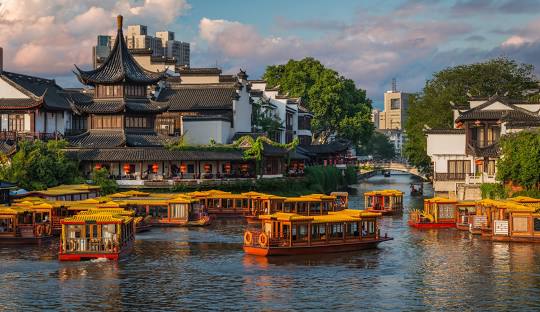
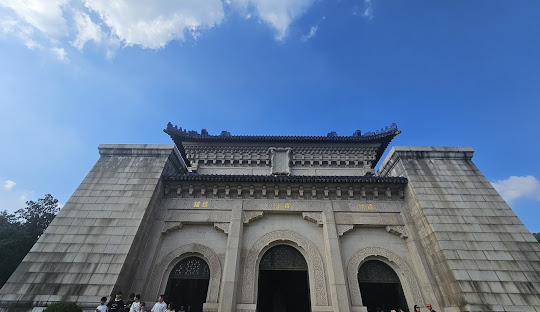
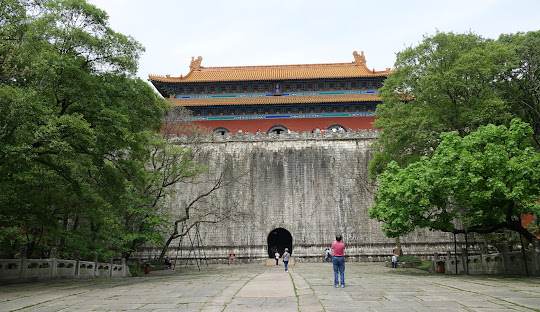
Nanjing, the capital of Jiangsu Province, is one of the four ancient capitals of China. As one of the birthplaces of Chinese civilization, Nanjing has served as the capital of several dynasties, kingdoms and republican governments throughout history, notably the Eastern Wu, the Eastern Jin, the Southern Dynasties, the Ming Dynasty (initially), and the Republic of China. The city is steeped in history, culture and scenic beauty, home to the Ming Xia Mausoleum, the Sun Yat-sen Mausoleum, the ancient City Wall, the Confucius Temple (Fuzimiao) and the Qinhuai River, the Presidential Palace, and the Purple Mountain (Zhongshan) scenic area.
Sun Yat-sen Mausoleum
Confucius Temple
Ming City Wall
Xuanwu Lake
Qinhuai River
Purple Mountain
Introduction
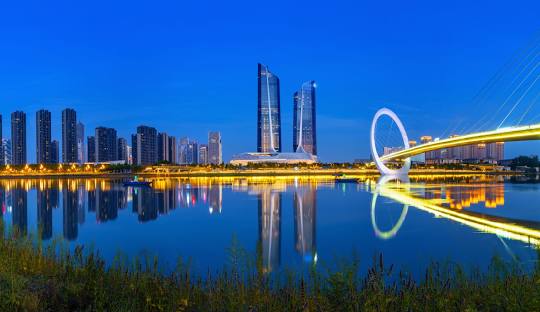
Nanjing offers a wealth of wonderful attractions for visitors. Each of the 11 districts of Nanjing plus the national-level Jiangbei New Area are unique in their own right, displaying their own special kind of charm. From city scapes showcasing some of the 21st century's most engaging modern architecture to antiquities literally thousands of years old, Nanjing really has it all.
When to Visit Nanjing
Most people will tell you that Nanjing is at her best in autumn. March can also be a good time to visit for botany fans, when the various shades of pink and purple plum blossoms come to life. Summer in Nanjing is hot but also a special time to visit since for Xuanwu Lake's blossoming of lotus flowers. A visit in winter may be a good choice for those who want to avoid crowds at attractions.
Nanjing Zones
Nanjing is a big city, but one with a small town feel, with a number of distinct zones in which most activities, aside from residential and industrial, can be found. These areas each offer their own unique glimpse into life in one of the world's most ancient metropolises.
Hanzhong Men is an ideal place from which to start a relaxing walk along the Qinhuai river that divides Nanjing, by and large, into east and west. Such a walk takes one past Stone City, the site of Nanjing's beginnings 2,500 years ago. Visitors come to witness the giant face carved into all that remains, a massive stone edifice that was latterly and ingeniously incorporated into the city wall. To the south west of the gate itself, Mochou Lake is the venue for the city's annual Dragon Boat race, one of the top such events in the country.
1912 was the year in which Dr. Sun Yat-sen founded the Republic of China, here in Nanjing. Hardly a fitting name for the city's premier destination for hedonism. Yet, there is more to the area than mere nightclubs; curious offerings are to be found in the alleyways to the west of the main entertainment complex that also reveal a glimpse into the Nanjing of old. Diagonally across the street to the south west, one finds the Jiangning Imperial Silk Weaving Museum with a host of exhibits not only limited to the garment industry. Immediately to the east, the Presidential Palace is one of China's top tourist attractions, while a little further is the slightly more modern Six Dynasties Museum.
Shanghai Lu and its environs are a major draw for Nanjing's international community, particularly the younger crowd who may be students at one of the nearby universities. A simple walk around the campus of either Nanjing University or Nanjing Normal University is a metaphorical breath of fresh air that leaves one feeling at peace, while the area also offers international restaurants, delis, shopping and business opportunities aplenty.
Purple Mountain is also home to scores of other attractions; near the top of our list would be the "cradle of Chinese astronomy" that is the Purple Mountain Observatory, and around the mountain's base, Nanjing's botanical gardens and aquarium. The gem of Purple Mountain however, remains Purple Cloud Lake, a popular destination for picnicing and swimming during the warmer months.
Hexi While meaning "west of the river", the Qinhuai, that is, Hexi usually more accurately refers to a second Central Business District that is rapidly developing. Here, no visit to our city would be complete without bearing witness to the atrocities on display at the Nanjing Massacre Memorial.
Xinjiekou For a city of ten million, Nanjing's centre that is Xinjiekou is in fact rather small, centred above the metro station with its 24 exits that efficiently place one almost anywhere in the CBD. At its northern end, shopping for only the uber rich in Deji Plaza plus a great selection of international dining options in IST Mall.
Top Destinations
Jiangsu Provincial Art Museum
Founded in 1936, Jiangsu Provincial Art Museum was the first National Art Museum of modern China. With its original and new incarnation both located on Changjiang Road, collections mainly comprise modern and contemporary art works, as well as ancient and modern Chinese and foreign works.
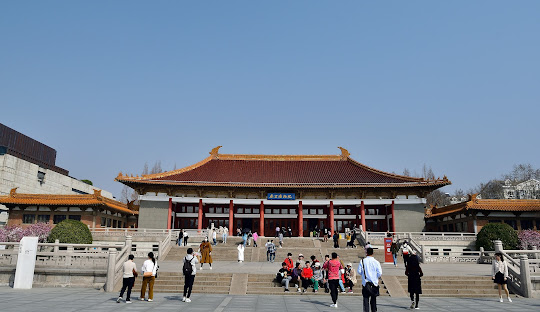
Nanjing City Museum
Founded in the largest, most complete group of official ancient buildings in Southern Jiangsu in 1978, Nanjing Museum is a comprehensive national key museum of history and art, with a collection of more than 100,000 cultural relics.
Taiping Heavenly Kingdom History Museum
An historical exhibition of the Taiping Heavenly Kingdom, together with the cultural relics and historical materials of General Xu Da, of the Ming Dynasty, that also houses an exhibition of cultural relics and historical materials of the Qing Dynasty's Jiangning government office.
Meiyuan New Village Memorial Hall
Exhibition hall of historical materials relating to negotiations between the Kuomintang and the Communist Party of China that took place between May, 1946, and March, 1947, headed by first Premier of China, Zhou Enlai.
Jinling Art Museum
Built on the former site of Nanjing Dyed Yarn Weaving Factory, Jinling Art Museum consists of the Nanjing Painting and Calligraphy Academy, Jinling Art Museum and the Old Southern City Memory Museum. An important cultural landmark in Nanjing and Jiangsu Province.
Nanjing Folk Customs Museum
A professional museum for studying, displaying, protecting and inheriting Nanjing folk culture, together intangible cultural heritage. The site of the museum is a national key cultural relics protection unit known as "the former residence of Ganxi". A large-scale and well-preserved residential complex dating from the Jiaqing period of the Qing Dynasty.
Jiangning Weaving Museum
Formerly specialised in producing satin for imperial and official use in the Qing Dynasty, the Jiangning Weaving Museum has four major permanent exhibitions; Jiangning Weaving, Yunjin Tianyi, Dream of Red Mansions and Chinese Cheongsam.
The Oriental Metropolitan Museum
Acknowledges the great significance of Nanjing as capital of the Six Dynasties, displaying the great achievements in history and culture during the times, and highlighting the important historical role of Nanjing in Chinese history. Another landmark building on the cultural street that is Changjiang Road.
Nanjing City Wall Museum
The Ming city wall of Nanjing was built in 1366, the 26th year of the reign of Emperor Zhi Zheng of the Yuan Dynasty. With 13 gates and a length of 35.267 kilometres, it is the longest city wall in the world.
More information, please visit
https://wb.nanjing.gov.cn/english_67934/travelling/.
Attractions
中山陵
夫子庙
明城墙
玄武湖
秦淮河
紫金山